Tools: Figma, Miro, Google Workspace
Timeline: 2 weeks
Focus: Information Architecture & Navigation Flow
🎯 Problem & Goal
Mimra Digital Solutions, a digital marketing agency, needed a website structure that clearly communicated their services and expertise while providing an intuitive user experience. The objectives were to:
- Simplify navigation for diverse user groups
- Highlight core services and portfolio
- Encourage user engagement through clear calls to action
🧭 Solution: High-Level Sitemap
A streamlined sitemap was developed to organize content effectively:
- Home: Introduction to Mimra’s services and value proposition
- About: Company background and team information
- Services: Detailed descriptions of offerings like SEO, SEM, and social media marketing
- Portfolio: Showcase of past projects and success stories
- Blog: Insights and updates on digital marketing trends
- Get Free Consultation: Lead generation through a consultation request form
🖼️ Visual: Sitemap
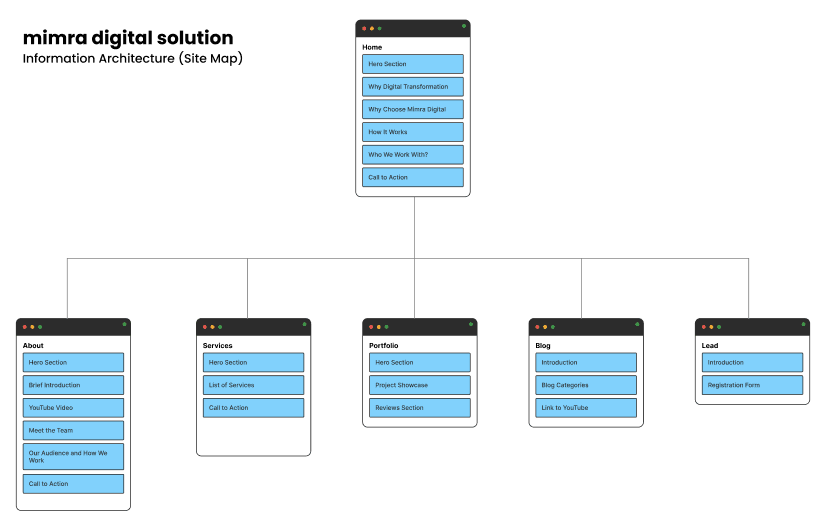
A clear, hierarchical diagram illustrating the website’s structure, ensuring easy navigation and content discoverability.
📈 Impact & Next Steps
✅ Improved user navigation leading to increased engagement
✅ Enhanced clarity of service offerings
✅ Established a foundation for future website enhancements
💡 Reflection
This project reinforced the importance of aligning website structure with user needs and business goals. Future steps include user testing to validate the sitemap’s effectiveness and inform iterative improvements.